This is a practical, ethical guide for students who want to write with confidence and integrity
Turnitin is one of the most widely used plagiarism-detection systems in schools and universities. When you submit a paper, Turnitin compares your writing to a massive database of student essays, journal articles, books, websites, and previously submitted work. The result is a similarity score — a percentage showing how much of your paper matches existing sources.
A high similarity score does not always mean plagiarism; sometimes it simply means you used too many direct quotes, relied heavily on definitions, reused old class notes, or didn’t paraphrase effectively. Still, if your score is higher than your teacher allows, it can feel stressful.

The good news? You can ethically reduce your Turnitin similarity score by improving your understanding, paraphrasing better, integrating sources thoughtfully, and strengthening your writing process.
This article teaches you exactly how to do that — without cheating or attempting to “beat” Turnitin as many students may be looking at it.
How Does Turnitin scan similarity
To fully understand and tackle this question and the questions that will follow within this article, we should first explore the exact purpose of Turnitin and the characteristics or components that make it fulfill its purpose.
First of all, let put its clear that Turnitin does not pinpoint plagiarism incidents and it cannot prove that you have plagiarized your paper. This is something important and you will learn when you read our post on what Turnitin detects and know more.
What Turnitin does is to create originality reports that display a similarity degree between the resources within its database and the assignments you have submitted through it. So, what makes up Turnitin’s database resource?
Well, the database used by Turnitin for comparison is made up of:
- Papers that have been previously submitted by students
- Archived and current online content that is available to the public
- Newspapers, journals, and books.
- This is accomplished through Turnitin’s partnerships with library databases, publishers, publications based on subscriptions, and digital reference collections.
There you have it. Now, let us explore the real issue further.
11 ways How to Reduce Similarity on Turnitin
Now that you have understood the purpose of Turnitin and the resources it uses to compare your submitted papers, you might be wondering how you can reduce or avoid similarities together.
Understandably, some of the text within your paper may match with some other text from a different author’s work. This can be brought about by sentence structures that bring out the meaning or even by sheer coincidence.
Therefore, there is a probability that some of your text may appear to be plagiarized even when it is not. Here, we will discuss the various ways through which you can reduce Turnitin similarity and get scot-free if you cheat or trick Turnitin.
1. Cite your Sources to Avoid Plagiarism
One of the most obvious and recommended solutions to reducing similarity in Turnitin is to cite your sources appropriately. All academic papers should have both in-text citations and a reference, a bibliography, or a works cited page. This applies to papers that require APA or MLA formatting style.
In other instances, you can correctly cite your papers using footnotes or endnotes, whereby you create an in-text citation by assigning numbers to the text.
This especially applies to academic papers that are inclined towards humanities. The formatting style that applies to such academic papers is Turabian or Chicago style.
After completely understanding your paper’s required formatting style, apply either style to cite your sources to reduce similarity appropriately.
2. Use Quotation Marks to Reduce Similarity
The second solution that can reduce similarity in Turnitin is applying quotation marks (“…”) around every word, sentence, or multiple sentences quoted from another source.
This is very important because, without applying quotation marks, Turnitin will perceive the borrowed text as plagiarism. You should note that Turnitin can only recognize double quotation marks (“…”), not single quotation marks (‘…’).
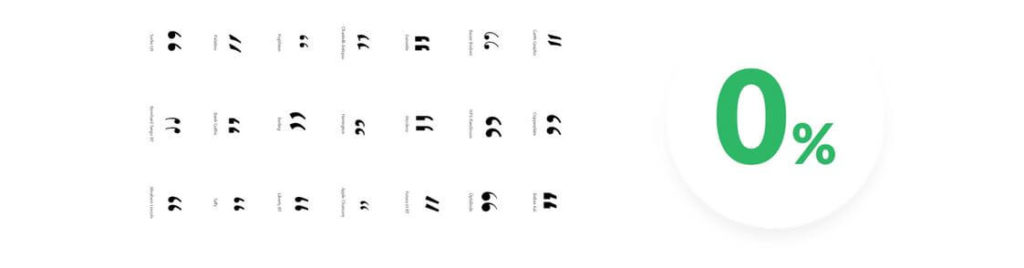
Therefore, you should be using double quotation marks every time you are quoting text from outside sources to reduce similarity in Turnitin.
3. Avoid too many Quotes
The third solution is to avoid overusing quotations. Too many quotations mean you have not dedicated enough time to your paper. Too many quotations, especially from similar sources, increases the chances of similarity in Turnitin.
You should avoid doing so. In instances where the particular language which has been applied cannot be expressed differently because it would change the meaning, you can use reverse quotations.
4. Paraphrase Thoroughly to Remove Plagiarism
The fourth solution is to paraphrase content from outside sources. This especially applies in situations where you have already used more than three quotes. In our other guide article, we determined that Turnitin cannot detect paraphrasing, and if you do it well, you will be fine.
Since you aim to reduce similarity in Turnitin, you should use your own words to explain what the original text is putting forward. Such words should not be very similar to those used by the original text. You should note that using synonyms is not paraphrasing.
This is because even if you use synonyms, the meaning of your text will be similar to the original text and Turnitin will detect it. Therefore, paraphrase wisely to reduce similarity in Turnitin.
5. Avoid Copying word-to-word
Another solution that can be used to reduce similarity in Turnitin is to exclude smaller matches of between 5 and 8 words. This works when it comes to bibliographies, commonly used words, and quotes in the settings of Turnitin.
However, this will only apply to students whose instructors have told them to do so. It also applies to instructors who are not very strict on matters concerning similarity in Turnitin.
As aforementioned, Turnitin does not display plagiarism during its report; rather, it indicates the amount of overlapping text found in other works.
You can get the papers or essays from online sources and paraphrase them. If the paper has infographics, you can copy them since Turnitin will not detect graphics in your paper.
6. Write From Understanding, Not From Copying Notes
If your class notes include text copied from textbooks or websites, using those notes in your essay may accidentally introduce similarities.
A better approach:
- Rewrite your notes in your own words
- Summarize concepts during study
- Avoid copying long sections from slides
Writing from understanding leads to originality organically.
7. Strengthen Your Thesis and Argumentation
Essays with high originality often have:
- A unique thesis
- A personal interpretation
- Independent analysis
- Examples or explanations in your own language
Turnitin flags copied phrasing — but it cannot flag original thinking.
Ask yourself:
- What is my unique viewpoint?
- How do I interpret this topic?
- What connections can I make that the sources didn’t?
These are the elements that reduce similarity the most.
8. Use Ethical Writing Tools
Some tools help clarify and revise your writing — without replacing it.
Helpful tools for improving originality:
- Grammarly — clarity and grammar
- Hemingway App — simplifies overly complex writing
- QuillBot (for grammar, not rewriting your whole essay)
- ChatGPT — for planning, explanations, brainstormingonly
Important:
Do not use tools that claim to “make your writing undetectable,” “rephrase everything,” or “beat Turnitin.”
These violate academic rules and often distort meaning in ways teachers spot instantly.
Use tools as assistants, not ghostwriters.
9. Keep Your Sources Organized to Avoid Accidental Copying
Accidental plagiarism often happens because students:
- Copy text to “use later”
- Forget to paraphrase fully
- Mix their own ideas with source text in the same notes
- Lose track of citations
Use organizing techniques like:
- Color-coded notes
- A research notebook
- A citation manager (Zotero, Mendeley, MyBib)
- A separate document for copied quotes
Good organization prevents accidental similarity.
10. Revise Sentences That Sound “Too Close” to the Original
After writing your draft, compare your paraphrases with the original sources.
Ask yourself:
- Does this sentence follow the same structure?
- Does the vocabulary match too closely?
- Could someone guess which source I copied from?
If yes, rewrite it again.
Strong paraphrasing feels natural, not mechanical.
11. Avoid Reusing your Own Past Papers (Self-Plagiarism)
Turnitin keeps copies of your previously submitted work. If you reuse an old assignment — even from your own account — your similarity score will spike.
If you need to use past research:
- Discuss it with your teacher
- Rewrite ideas from scratch
- Avoid copying old paragraphs
- Cite your previous work if allowed
Self-plagiarism is still plagiarism in academic settings, and many students don’t realize it.
Final Thoughts
The goal isn’t to “fool” Turnitin. If you want to know how to beat Turnitin AI detection, you can read that guide for more.
However here, the goal is to:
- understand your topic
- write in your own voice
- use sources responsibly
- cite ideas properly
- develop original interpretations
When you follow ethical writing habits, your similarity score naturally drops — and your confidence as a writer grows.
While plagiarism is abhorred and we encourage against it, sometimes having a few ways to trick, cheat or fool Turnitin can be useful. You can read our guide on the acceptable Turnitin score to know how much plagiarism is tolerated.
We do not encourage such shortcuts, but you may need them. This happens if you have no time, have a short deadline, or you just want to plagiarize and never get caught.
There you have it, but be careful to follow your university’s academic integrity policies. Do not even trust your own papers since Turnitin detects previously submitted work. Cheers!